
Choosing the Best Voice Over Recording Gear: Essential Voice Recording Tools for Professional Arabic Voice-Overs

When it comes to producing high-quality Arabic voice-over work, having the right equipment is just as important as having the right talent. Whether you're a business, agency, or producer, investing in the essential voice recording tools can make all the difference in delivering clear, professional audio that truly brings scripts to life. In this post, I’ll walk you through everything you need to know about selecting the best gear for your voice-over projects. Let’s dive in!
Why Investing in Essential Voice Recording Tools Matters
Choosing the right tools for voice recording is not just about sound quality; it’s about creating an environment where the voice talent can perform at their best. The right gear helps reduce background noise, captures the full range of vocal tones, and ensures the final product sounds polished and professional.
For Arabic voice-over work, clarity and warmth are key. Arabic has unique phonetic qualities that require microphones and equipment capable of capturing subtle nuances without distortion. When you invest in essential voice recording tools, you’re setting yourself up for success by ensuring every word is heard clearly and every emotion is conveyed perfectly.
Here are some benefits of using the right gear:
Improved audio clarity that enhances listener engagement
Reduced post-production time thanks to cleaner recordings
Greater consistency across different projects and sessions
Professional sound quality that meets industry standards

Essential Voice Recording Tools You Should Consider
When building your voice-over recording setup, there are several key pieces of equipment you’ll want to include. Each plays a vital role in capturing and producing high-quality audio.
1. Microphone
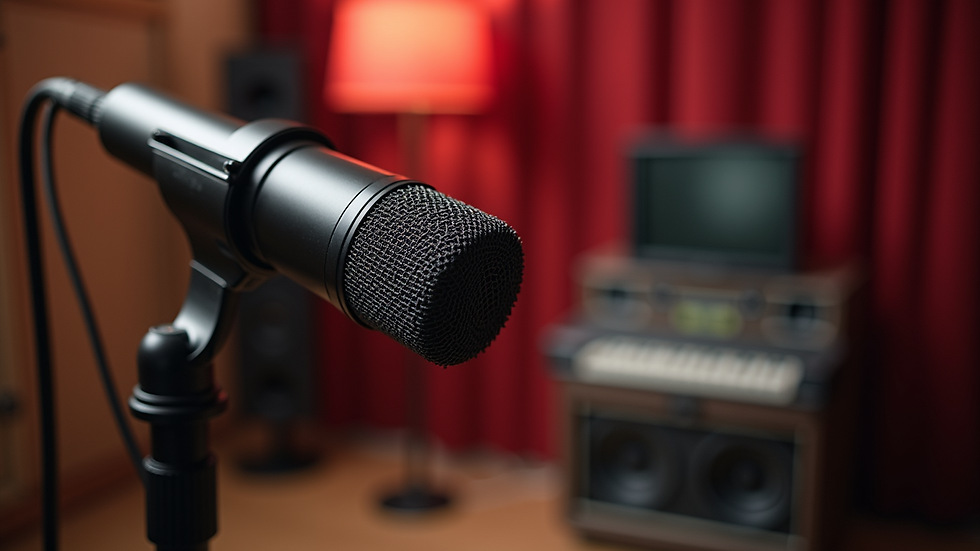
The microphone is the heart of your recording setup. For Arabic voice-over work, a large-diaphragm condenser microphone is often the best choice. These mics are sensitive and capture a wide frequency range, which helps preserve the richness of the voice.
Tips for choosing a microphone:
Look for a cardioid polar pattern to reduce background noise.
Choose a mic with a flat frequency response for natural sound.
Consider USB microphones for beginners or XLR mics for more advanced setups.
2. Audio Interface
An audio interface connects your microphone to your computer and converts analog signals into digital audio. It also provides phantom power for condenser microphones.
What to look for:
Low latency for real-time monitoring.
High-quality preamps to boost microphone signals cleanly.
Multiple input/output options if you plan to expand your setup.
3. Headphones
Closed-back headphones are essential for monitoring your recordings without sound leakage. They help you catch any unwanted noise or distortion during the session.
4. Pop Filter and Shock Mount
A pop filter reduces plosive sounds (like "p" and "b") that can cause distortion. A shock mount isolates the microphone from vibrations and handling noise.
5. Acoustic Treatment
Recording in a treated space minimizes echo and background noise. Use foam panels, bass traps, or portable vocal booths to improve room acoustics.

What Equipment Do I Need for Voice Recording?
Now that you know the essential tools, let’s break down exactly what you need to get started with voice recording, especially for professional Arabic voice-over projects.
Basic Setup for Beginners
USB Microphone: Easy to use and affordable.
Closed-back Headphones: For accurate monitoring.
Pop Filter: To reduce plosives.
Recording Software: Free options like Audacity or paid DAWs like Adobe Audition.
Intermediate Setup
XLR Condenser Microphone: For better sound quality.
Audio Interface: To connect your mic and improve sound conversion.
Shock Mount and Pop Filter: To protect your recordings.
Acoustic Panels: To treat your recording space.
Professional DAW: Software with advanced editing features.
Advanced Setup for Studios
High-End Condenser Microphones: With multiple polar patterns.
Multi-Channel Audio Interface: For complex setups.
Professional Monitoring Headphones and Studio Monitors: For mixing and mastering.
Vocal Booth or Isolation Shield: For perfect sound isolation.
Advanced Acoustic Treatment: Customized for your room.
How to Choose the Right Gear for Your Needs
Selecting the best gear depends on your budget, recording environment, and the level of professionalism you want to achieve. Here are some practical tips to guide your decision:
Assess your recording space: If your room has a lot of echo, prioritize acoustic treatment.
Set a budget: Start with the essentials and upgrade over time.
Consider portability: If you need to record on the go, compact gear is a must.
Test before buying: Whenever possible, try out microphones and headphones to find what suits your voice best.
Read reviews and seek recommendations: Learn from other professionals who specialize in Arabic voice-over work.
Remember, the goal is to create recordings that sound natural and clear, so focus on gear that enhances your voice without adding unwanted color or noise.
Tips for Getting the Best Results with Your Voice Over Recording Gear
Having the right equipment is just the first step. How you use it makes all the difference. Here are some actionable tips to maximize your recording quality:
Maintain consistent mic distance: Keep about 6-12 inches between your mouth and the microphone.
Use a pop filter: Always use one to avoid harsh plosives.
Record in a quiet environment: Turn off fans, air conditioners, and other noise sources.
Warm up your voice: Do vocal exercises before recording to improve tone and clarity.
Monitor your recordings: Use headphones to listen for any issues in real-time.
Keep your gear clean: Dust and moisture can affect microphone performance.
Use proper gain settings: Avoid clipping by setting your input levels correctly.
By combining the right gear with good recording habits, you’ll consistently produce professional-grade Arabic voice-over audio.
Elevate Your Arabic Voice-Over Projects with the Right Gear
Choosing the best voice over recording gear is a crucial step toward delivering exceptional Arabic voice-over productions. With the right microphone, audio interface, headphones, and acoustic treatment, you can capture every nuance of the Arabic language with clarity and warmth.
Investing in quality equipment not only improves your audio but also enhances your workflow, making it easier to produce consistent, high-quality recordings that meet the expectations of clients worldwide. Whether you’re just starting out or looking to upgrade your studio, focusing on these essential voice recording tools will help you bring scripts to life like never before.
Remember, great audio starts with great gear - and with the right setup, your Arabic voice-over projects will sound professional, polished, and ready to impress.
If you’re ready to take your voice-over recordings to the next level, start by evaluating your current setup and identifying which essential tools you need to add or upgrade. Your audience deserves the best, and with the right gear, you can deliver just that.


Comments